


If you have ever submitted a job application online and didn’t receive any response, you may have wondered this yourself at least once. “Was my profile seen by anyone? “
It’s a reasonable question. You upload your resume. You update your LinkedIn. You hit apply. And then… silence.
So, what do recruiters really do behind the scenes? Do they go through every profile? Do they search? Or do they just randomly scroll?
Considering the actual scenario. Not the polished one. The real one.
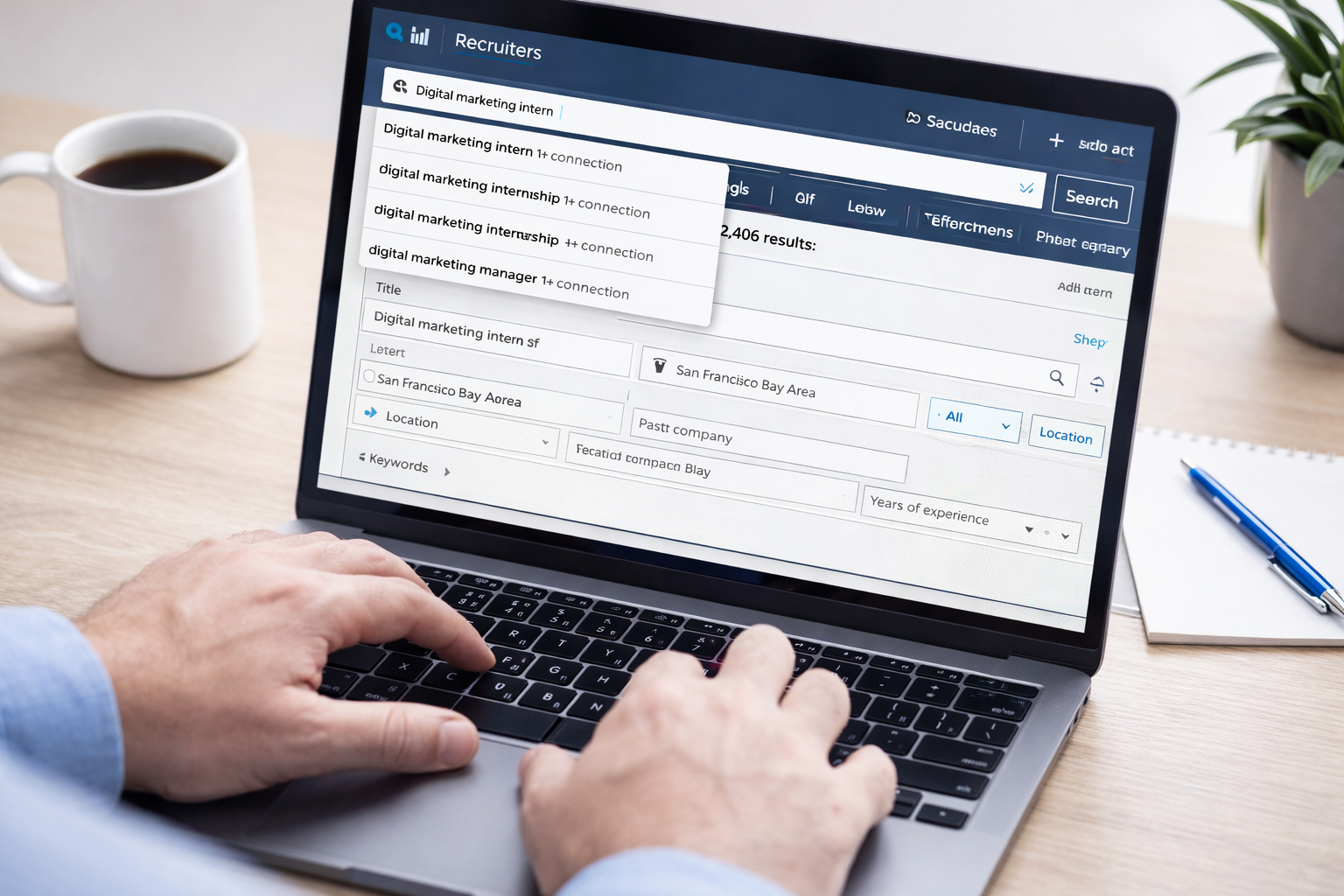
Recruiters don’t just browse. They look for profiles by searching.
This part surprises many people.
Recruiters do not leisurely go over the profiles one by one with a cup of coffee in hand.
They’re searching.
They launch LinkedIn, job portals, or their ATS and enter words in a search field.
Things such as:
- Java developer
- Customer support executive
- Digital marketing intern
- 23 years experience Excel
Either your profile pops up in the search results or it doesn’t. That is the initial filter.
The keywords are more important than the design
Lots of job seekers change profile banners, add emojis, and write fancy summaries for hours. Ok, this is fine. But it’s not what gets you found.
Recruiters search by:
Job titles
Skills
Tools
Years of experience
Location
If your profile does not mention the things they are searching for, you are like an invisible person. Even if you are the perfect candidate for the role.
It seems unfair, right? But that is how it works.
The job titles matter a lot (more than you think)
This is the biggest mistake that most people make. Some people change their job title to something like Growth Ninja or Marketing Rockstar. Nice title. But recruiters are not searching for that. They are searching for:
- Digital marketer
- SEO executive
- Performance marketing specialist
If your job title is a creative one but it is not clear, you are making the recruiter’s work less easy. And when recruiters are busy, less easy usually means skipped. A simple, boring title wins here.
Recruiters do a quick skim first and then they read.
When your profile pops up in the search results, the recruiter clicks on it.
Then they skim.
Quickly.
They focus on:
- Headline
- Current position
- Skills section
- Latest experience
If in the first seconds they can’t figure out what you do, they are definitely going to move on.
No second chances.
I have even witnessed this very quickly in real time.
The summary part? Most people make it too complicated.
You do not have to write a long one.
Recruiters do not read long texts.
A few straight forward lines are more effective.
Simply like:
“Customer support professional with 2 years of experience in handling chat and email queries. Experienced with CRM tools and ticketing systems.”
Plain. Clear. No drama.
That’s sufficient.
Descriptions of experience should reflect a genuine tone.
Here’s something else.
Recruiters by reading a few lines can recognize copied content.
If everything looks like a piece of writing from a book, it’s a big warning.
Instead of:
Responsible for managing multiple tasks and delivering results
Try to say:
Responded to customer inquiries through chat and email, nominally processing 40-50 tickets a day.
Which one of these is more believable?
Exactly.
Details matter.
Skills sections are often ignored for one reason
People just list everything.
Python. Excel. Leadership. Communication. Time management. Teamwork. Creativity.
It turns into a mess.
Recruiters skim through skills, not study them in detail.
If they’re hiring for a sales executive, they want to see sales.
Not 30 unrelated skills around it.
Put the major ones first.
Be truthful. Always.
Location and availability are more significant than people admit
You may be a great fit for the role, but if you are located in a different area or are not available to start soon, the recruiters might ignore you.
They frequently sort by:
- City
- Notice period
- Ready to relocate
- Preference for remote or onsite work
It is not a matter of personal feeling. It is a matter of practicality.
Recruiters don’t always contact the best profiles
This may hurt a bit.
They message the profiles that:
- Match the role requirements
- Are easy to understand
- Look responsive
- Fit their budget
It sometimes happens that a good enough profile is contacted before a great one.
Timing matters as well.
Being active is more helpful than you realize
Profiles that look active have higher chances.
Recently updated.
A recent post.
A small change in the profile.
It is a sign that you are around.
No one wants to send a message to an abandoned profile.
Applications and searches work together
Recruiters don’t only use search.
They also look at applications.
But here’s the thing.
If your profile fits their search, and you’ve applied, you’re more likely to get noticed.
It’s like meeting them halfway.
Common things that quietly hurt profiles
Well, to be honest. These happen all the time.
- Vague job descriptions
- Missing skills
- Confusing titles
- Old roles still marked as current
- Copy, paste summaries
None of these scream “bad candidate”. They only make the recruiter doubt. And doubt usually means skipped.
A quick reality check
Recruiters are not trying to reject you. They’re trying to fill roles as fast as possible. So if your profile helps them to do this, you’re in. If it even a little slows them down, they are gone. That’s the game.
So what should you really do?
Think like a recruiter.
Ask yourself:
- If I search my job title, would my profile show up?
- Can someone get my role in 5 seconds?
- Does this guy sound like a real person or a template?
Small changes help more than big rewrites.
One last thing
Your profile doesn’t have to impress everyone.
It only needs to make the right person stop scrolling.
That’s all.
Happy job hunting!